- What is this product?
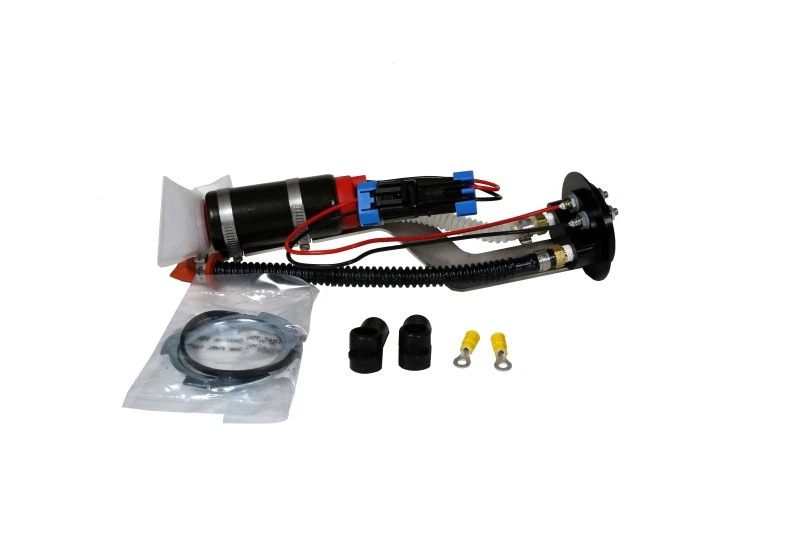
- It is a 340LPH in-tank fuel pump and hanger assembly for compatible 1986–1998.5 Ford Mustang applications.
- What does 340LPH mean?
- It means the pump is rated to flow approximately 340 liters of fuel per hour under its specified test conditions.
- What years does it fit?
- It is intended for compatible 1986 through 1998.5 Ford Mustang applications.
- Why does the listing say 1998.5 instead of simply 1998?
- Some Mustang fuel-system configurations changed during the production period, so the mid-year cutoff is important and should be verified before ordering.
- Does it come with a hanger?
- Yes, the product is described as a fuel pump and hanger assembly.
- Is the fuel-level sender included?
- It may be. Verify the exact package contents.
- Does it include a fuel strainer?
- It may include a pickup sock or strainer where supplied.
- Does it include wiring?
- It may include electrical terminals or a pigtail, but verify the exact kit.
- Does it include a fuel pressure regulator?
- No, not unless specifically stated.
- Can fuel starvation damage an engine?
- Yes, especially under high load or boost.
- Can this pump help prevent fuel starvation?
- It can increase available fuel flow, but the complete system must still be correctly designed.
- Does the hanger matter as much as the pump?
- Yes. The hanger affects mounting, pickup position, electrical connection, feed and return routing, and sender compatibility.
- Why should the tank be cleaned?
- Rust, dirt, and old fuel deposits can damage the new pump or block the strainer.
- Should the fuel filter be replaced when installing the pump?
- It is strongly recommended.
- Does the pump use fuel for cooling?
- In-tank pumps are cooled in part by being submerged in fuel.
- Is it bad to repeatedly run the tank nearly empty?
- It can increase pump heat and reduce cooling.
- Can poor electrical connections make the pump noisy?
- They can contribute to poor operation.
- Should voltage be measured at the pump while it is running?
- Yes when diagnosing fuel-delivery problems.
- Can battery voltage and pump voltage differ?
- Yes because of wiring resistance and voltage drop.
- Should electrical connectors be fuel-safe?
- Yes where components are exposed to fuel or tank vapors.
- Can ordinary wire be used inside the fuel tank?
- No. In-tank wiring must be rated for fuel exposure.
- Can this pump be used with E85?
- Only if the exact pump, seals, hoses, and hanger components are specifically compatible with ethanol-rich fuel.
- Can it be used with regular gasoline?
- Usually yes, subject to the product’s fuel-compatibility specifications.
- Can it be used with race fuel?
- Only if the pump and seals are rated for that specific fuel.
- Can this pump be used in a return-style system?
- Yes, if the hanger and regulator setup are compatible.
- Can it be used in a returnless system?
- Possibly, but the exact model-year fuel-system strategy must be verified.
- What is the estimated product weight?
- Approximately 4–8 lb depending on the hanger, sender, fittings, and included hardware.
- What shipping weight should I use?
- Approximately 10 lb is a practical estimated packaged weight.
- Why can shipping weight vary?
- Pump construction, hanger material, sender components, seals, hardware, wiring, and packaging affect the final weight.
- What should I inspect first?
- Check the pump, hanger, flange, tubes, electrical connector, sender, float arm, strainer, seals, and mounting hardware.
- Should the pump be tested before reinstalling the tank?
- Follow the manufacturer’s recommended procedure while avoiding prolonged dry operation.
- What should I verify before ordering?
- Confirm the exact 1986–1998.5 Ford Mustang production date, fuel-tank and hanger design, return or returnless fuel-system configuration, feed and return connections, fuel-level sender compatibility, electrical connector, pump voltage and current requirements, regulator setup, fuel type, engine horsepower demand, and exact package contents before purchase.