- What vehicles does this aluminum fuel tank fit?
- It is intended for compatible 1963–1972 Chevrolet C10 and GMC pickup trucks.
- Is this a direct replacement fuel tank?
- It can serve as a replacement or custom upgrade depending on the exact truck and mounting configuration. Verify tank dimensions and mounting points before purchase.
- What is the tank made from?
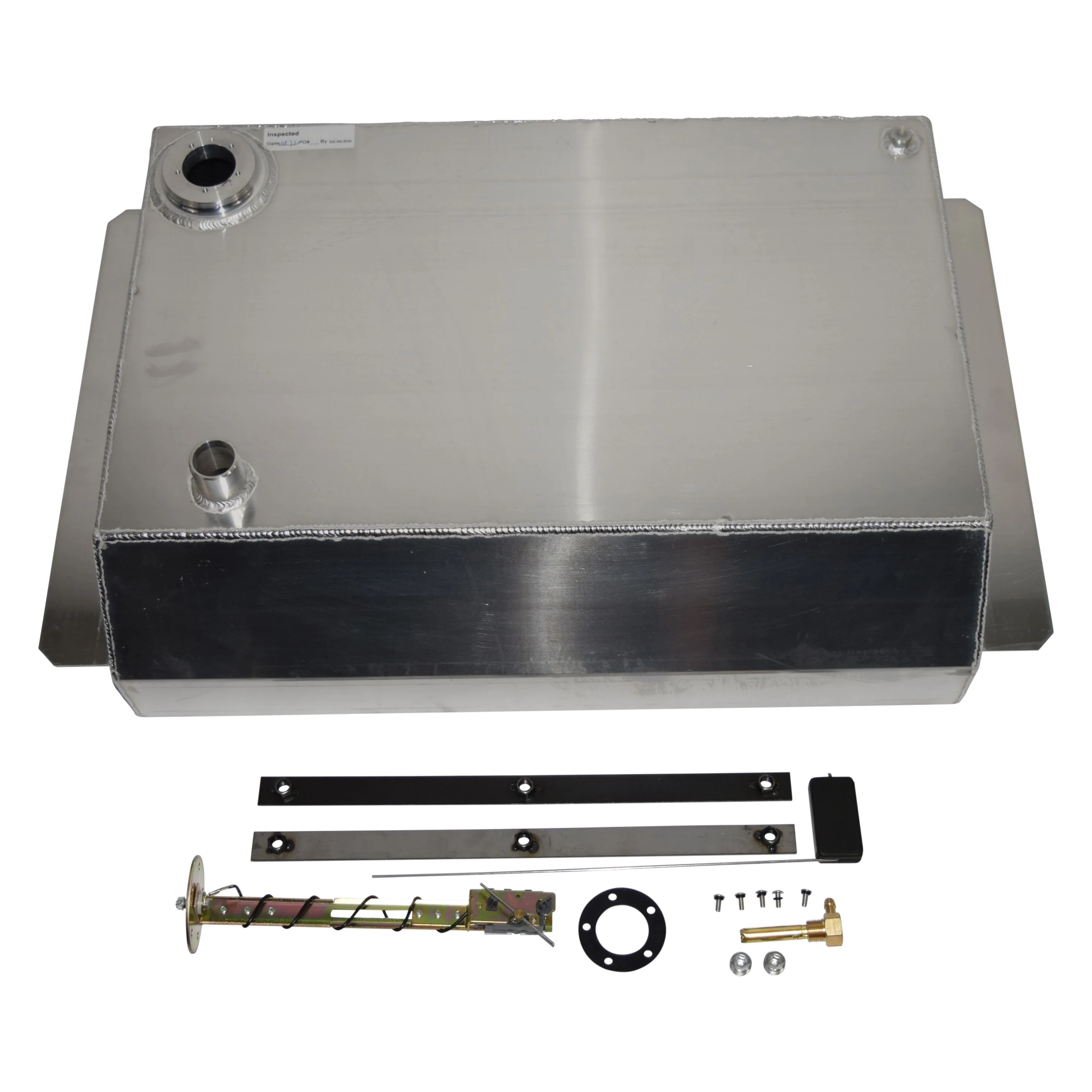
- It is constructed from aluminum, offering a lightweight and corrosion-resistant alternative to an aging steel tank.
- Will this tank rust like the original steel tank?
- Aluminum does not rust in the same way as steel, making it a good option for long-term corrosion resistance.
- Is this tank suitable for gasoline?
- Yes, it is intended for compatible gasoline fuel-system applications.
- Will it fit a 1963 Chevy C10?
- It may fit compatible 1963 C10 applications, but the exact mounting location, chassis layout, and tank dimensions should be verified.
- Will it fit 1964–1972 Chevy C10 trucks?
- It is intended for compatible trucks within that year range, but exact fitment should always be confirmed against the supplier specifications.
- Does it fit GMC pickups too?
- Yes, for compatible GMC pickup applications that share the required chassis and mounting arrangement.
- Is this an under-bed fuel tank?
- Many aluminum replacement tanks for these trucks are used in under-bed or relocation-style installations, but the exact mounting location depends on the tank design.
- Can this replace an in-cab fuel tank?
- Depending on the application, it may be used as part of an under-bed conversion. Additional brackets, filler components, hoses, and fuel-line changes may be required.
- What are the advantages of relocating the fuel tank under the bed?
- It can free up cab space, move fuel storage away from the passenger compartment, and create a cleaner custom-truck setup.
- Does the fuel sending unit come with the tank?
- Do not assume a sending unit is included unless the supplier specifically lists one as part of the package.
- Can I reuse my original sending unit?
- Possibly, but the sender opening, bolt pattern, depth, and resistance range must match the tank and fuel gauge.
- Does it include a fuel pump?
- Usually no. Fuel pumps should be verified separately unless specifically included.
- Is a filler neck included?
- Not necessarily. Filler necks, caps, hoses, and related hardware are often sold separately.
- Does the tank include mounting straps?
- Mounting straps or brackets may vary by kit. Confirm the exact package contents before ordering.
- Are fuel lines included?
- Fuel feed, return, and vent lines are typically separate unless specifically listed.
- Does the tank have a vent provision?
- Many aluminum tanks include vent provisions, but the exact fitting style and location should be confirmed before installation.
- Is proper fuel-tank venting important?
- Yes. Incorrect venting can cause fuel-delivery problems, pressure buildup, or filling issues.
- Does the tank have a return-line fitting?
- That depends on the specific tank design. Verify whether your fuel system requires a return line and whether the tank supports one.
- Can it be used with a carbureted engine?
- Yes, provided the tank outlet, pump setup, venting, and fuel-line configuration are appropriate for the carbureted system.
- Can it be used with electronic fuel injection?
- Possibly. EFI applications may require a high-pressure pump, return line, baffling, sump, or compatible in-tank pump module.
- Is the tank baffled internally?
- Internal baffling varies by manufacturer and model. Verify the exact tank specifications if baffling is important for your build.
- Will it fit a shortbed truck?
- Possibly, but bed length, frame layout, exhaust routing, and spare-tire position must be checked before installation.
- Will it fit a long-bed truck?
- It may fit compatible long-bed applications, but the same clearance and mounting checks are required.
- Can the spare tire remain in its original location?
- Not always. Some under-bed fuel-tank installations may interfere with the factory spare-tire location.
- Can dual exhaust interfere with the tank?
- Yes. Exhaust pipes and mufflers must maintain adequate clearance from the fuel tank and lines.
- Will lowered suspension affect fitment?
- It can. Lowered trucks may have reduced axle and chassis clearance, so full suspension travel should be checked.
- Is custom fabrication sometimes required?
- Yes. Depending on the truck and tank design, brackets, filler routing, straps, or fuel lines may need modification.
- Is aluminum strong enough for a truck fuel tank?
- Yes, when properly designed and fabricated. Aluminum is widely used for automotive fuel tanks because it is lightweight and corrosion resistant.
- Can the tank be painted or coated?
- Yes, but any coating should be compatible with aluminum and applied without blocking vents, fittings, or mounting surfaces.
- What should I inspect before installation?
- Check the frame, bed supports, exhaust routing, spare-tire area, suspension clearance, filler location, fuel lines, vent routing, and mounting points.
- What is the estimated shipping weight?
- A practical provisional packaged shipping weight is about 30 lb (13.6 kg), although the exact weight depends on tank size, capacity, and included hardware.
- What should I verify before ordering?
- Confirm the 1963–1972 Chevrolet/GMC application, tank dimensions, fuel capacity, mounting location, filler-neck position, sender opening, outlet fittings, vent provisions, fuel-line configuration, bed setup, and chassis clearance before purchase.