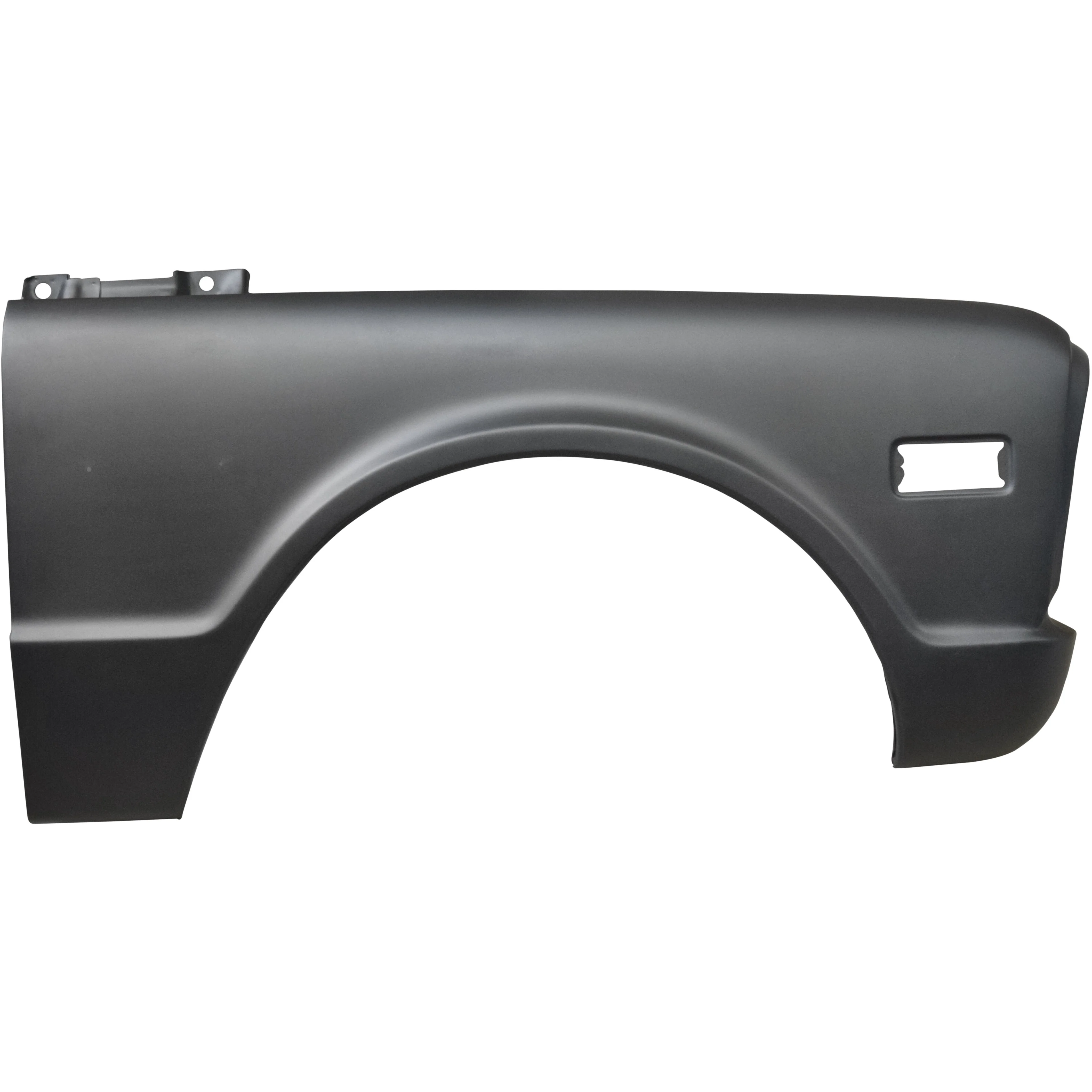
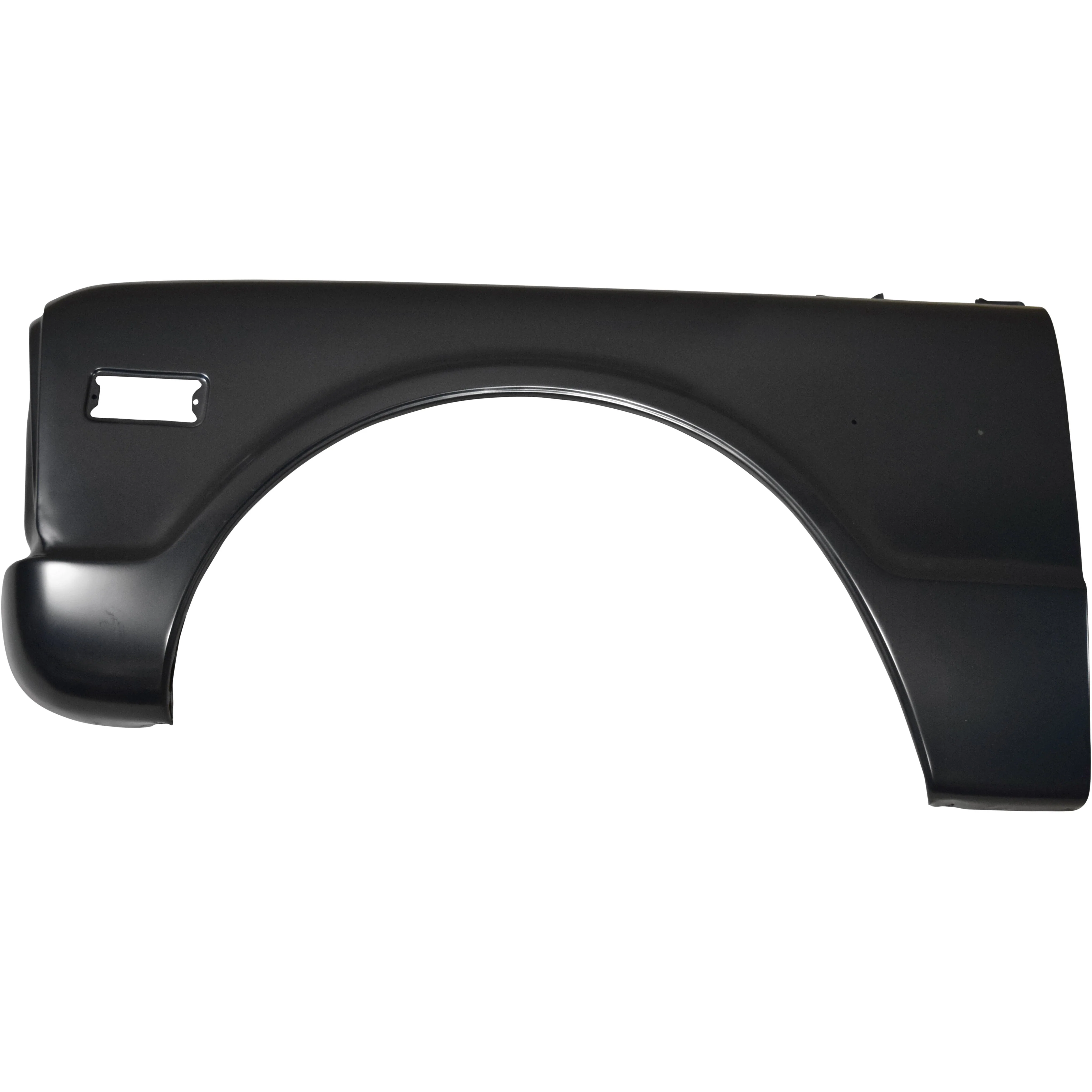
- What vehicle does this front fender fit?
- It is designed for compatible 1969–1972 Chevrolet C10 pickup trucks.
- Is this the left or right side?
- This is the RH / right-hand / passenger-side front fender.
- Will it fit a 1969 Chevy C10?
- Yes, for compatible 1969 Chevrolet C10 pickup applications.
- Will it fit 1970, 1971, and 1972 C10 trucks?
- Yes, for compatible Chevrolet C10 pickups within the 1970–1972 model years.
- What area of the truck does this panel replace?
- It replaces the outer passenger-side front body panel surrounding the front wheel opening and engine bay.
- Is this a steel fender?
- Yes. It is typically made from formed steel for body repair and restoration.
- Is this an inner or outer fender?
- This is the outer front fender. The inner fender or wheelhouse is normally sold separately.
- Is it a bolt-on replacement?
- It mounts in the factory-style fender location using the truck’s body mounting points, although adjustment and shimming may be required.
- Is professional installation recommended?
- Professional installation is recommended if the truck has previous collision damage, distorted mounting points, or significant rust in the surrounding structure.
- What types of damage can this fender replace?
- It is suitable for replacing severe rust, dents, creases, collision damage, cracks, or heavily repaired original sheet metal.
- Is replacing the complete fender better than using patch panels?
- For extensive damage, yes. A complete fender can provide a cleaner foundation than repairing several badly damaged areas individually.
- Does it include the inner fender?
- No. The inner fender is normally a separate component unless specifically included by the supplier.
- Does the fender include mounting hardware?
- Do not assume mounting bolts, clips, nuts, or other hardware are included unless the supplier specifically states so.
- Are the side marker light components included?
- Marker lights, lenses, sockets, and wiring are generally sold separately.
- Does it include emblems or trim?
- No. Emblems, badges, moldings, and decorative trim are normally transferred from the original truck or purchased separately.
- Does it come painted?
- Usually no. Replacement sheet-metal panels commonly arrive with a protective coating or primer rather than final body-color paint.
- Should I paint the fender before installation?
- It is better to test-fit and align the panel first. Final bodywork, primer, and paint should be completed after the correct gaps are established.
- Is the wheel opening already formed?
- Yes. The wheel-opening contour is formed into the fender for the intended C10 application.
- Can this fender affect hood alignment?
- Yes. The fender position contributes to hood gap and front-end alignment, so the hood should be checked during installation.
- Should the passenger-door gap be checked too?
- Yes. The rear edge of the fender aligns with the passenger door, so the door gap should be verified before final tightening or refinishing.
- Does grille alignment matter?
- Yes. Test-fit the fender with the grille and surrounding front sheet metal to help maintain proper front-end alignment.
- Can worn cab mounts affect fender fitment?
- Yes. Sagging cab mounts, radiator support damage, or previous collision repairs can make a correctly shaped replacement panel appear misaligned.
- Will it work with aftermarket inner fenders?
- Possibly, but aftermarket inner fenders can have different contours or mounting details. Test-fitting is important.
- Can oversized tires cause clearance problems?
- Yes. The fender may fit the truck correctly while oversized wheels, tires, or modified suspension reduce wheel-opening clearance.
- Can I use this fender on the driver side?
- No. This RH fender is specifically shaped for the passenger side.
- Is the RH fender interchangeable with the LH version?
- No. Left- and right-side fenders are mirror-specific body panels.
- Is this suitable for a full restoration?
- Yes. It is a practical replacement for restoration projects where the original passenger-side fender is heavily rusted or damaged.
- Is minor modification sometimes required?
- Yes. Aftermarket body panels can require minor shimming, hole adjustment, edge work, or fitting to achieve ideal panel gaps.
- What other parts should I inspect before installation?
- Inspect the inner fender, radiator support, hood hinges, grille mounting points, cab mounts, passenger-door alignment, and nearby sheet metal.
- What should I verify before ordering?
- Confirm the 1969–1972 Chevrolet C10 application, RH passenger-side orientation, outer-fender configuration, mounting points, wheel opening, hood alignment, grille fit, inner-fender compatibility, and passenger-door gap before purchase.
- What is the estimated shipping weight?
- A practical packaged shipping weight is approximately 25 lb (11.3 kg), allowing for the steel fender and protective packaging.