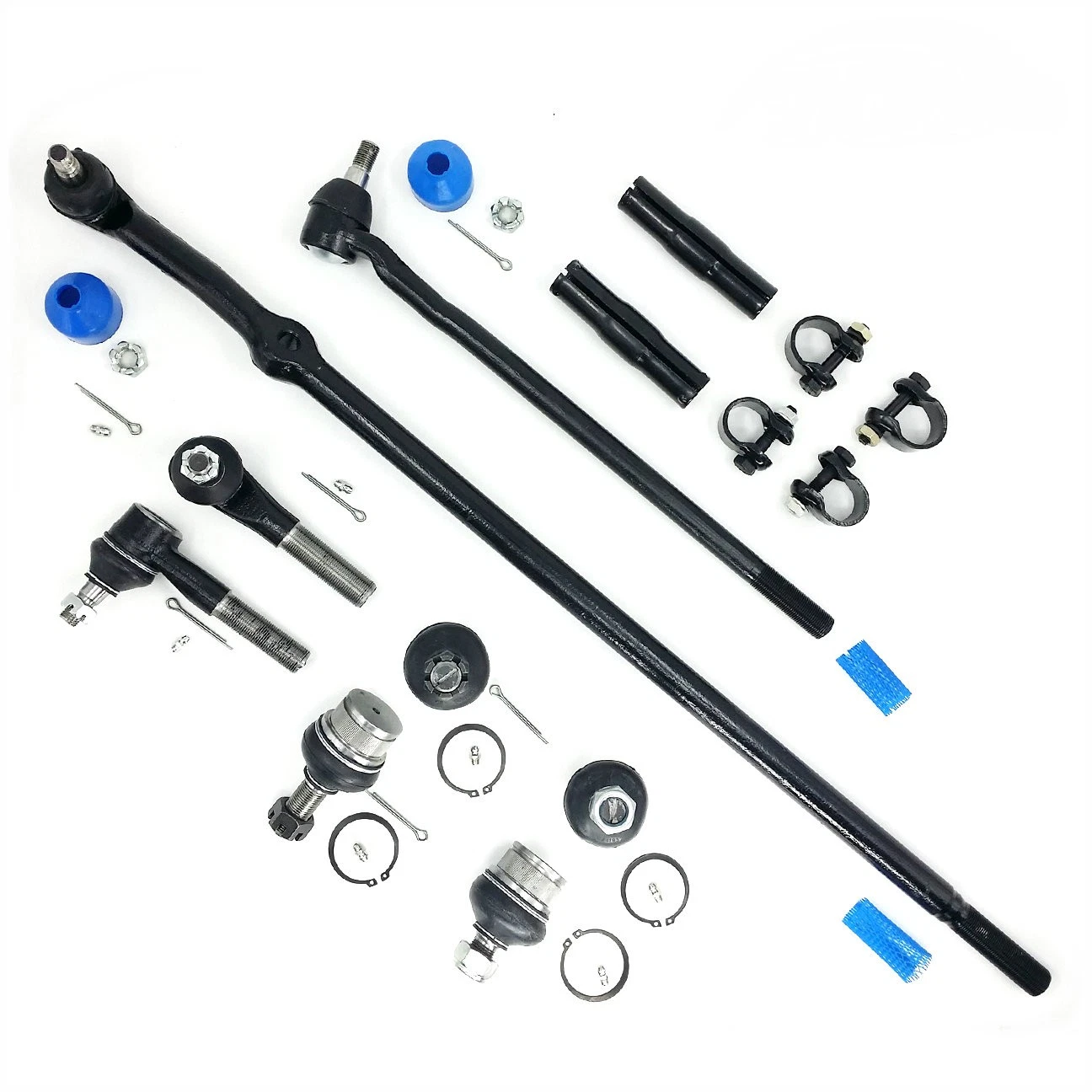
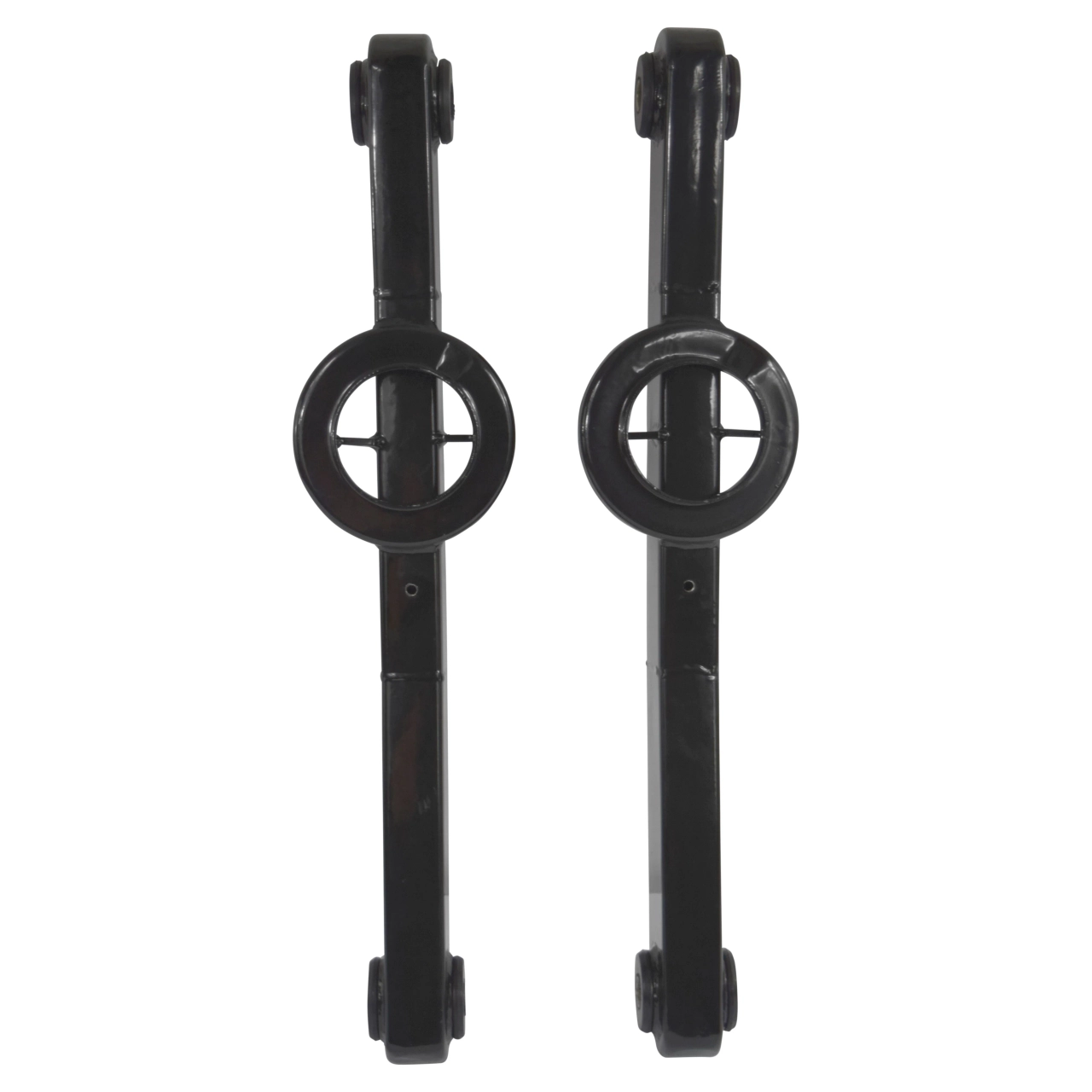
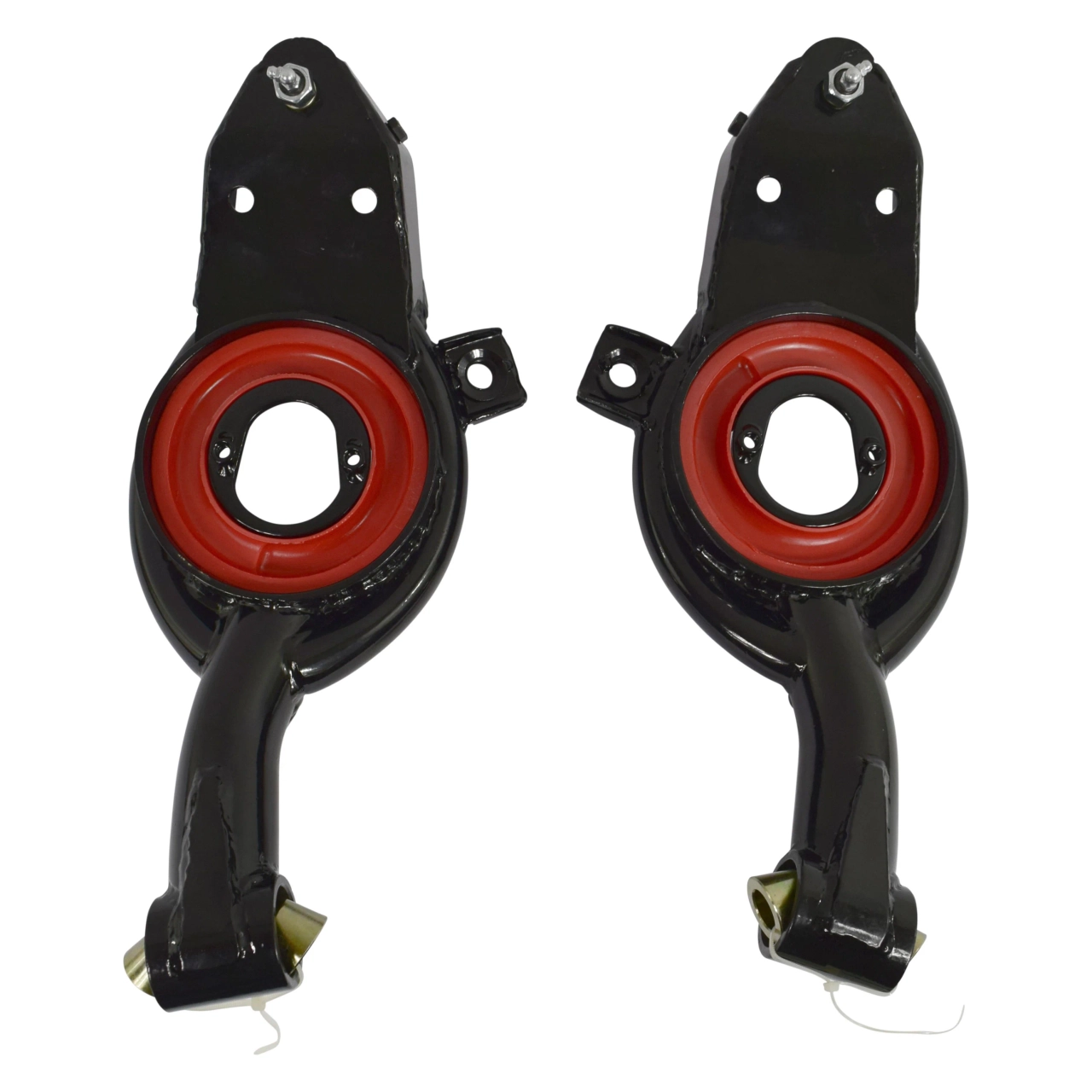
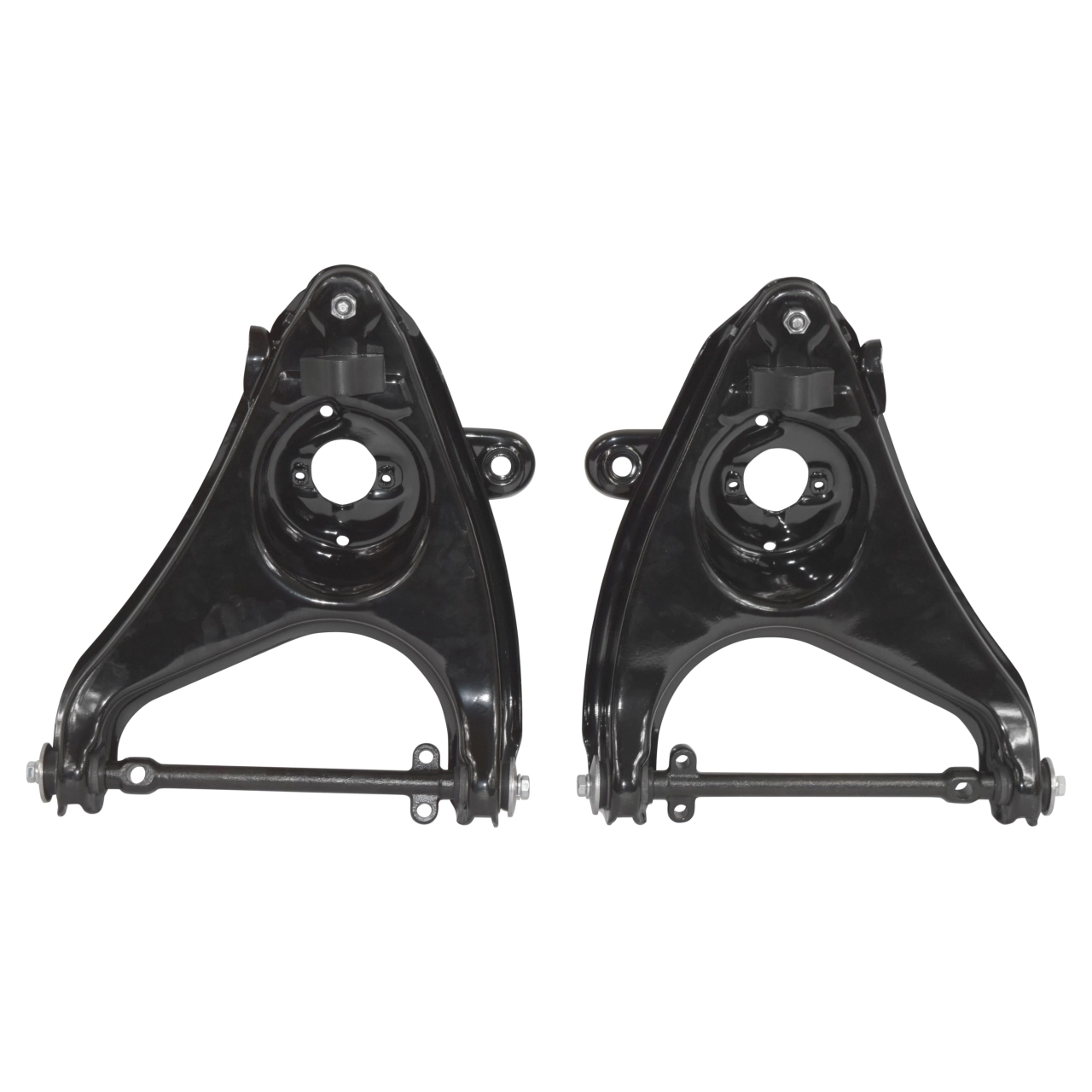
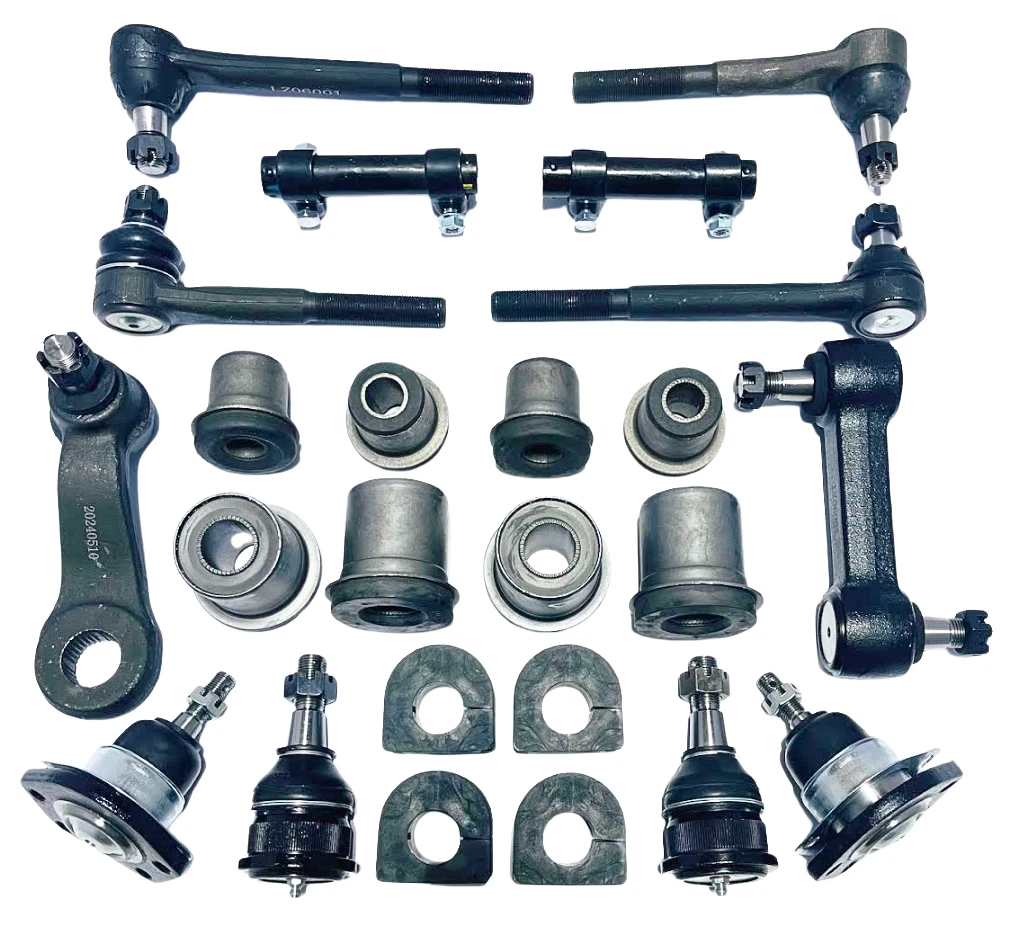
- What is included in this front suspension kit?
- This type of 10-piece kit typically includes upper ball joints, lower ball joints, inner tie rod ends, outer tie rod ends, and tie rod adjusting sleeves.
- What vehicles does this kit fit?
- It is intended for compatible 1980–1996 Ford Bronco and Ford F-150 4WD applications.
- Does this kit fit 2WD models?
- No. This listing is intended for compatible 4WD front suspension and steering systems.
- Is this kit for the front or rear suspension?
- It is for the front steering and suspension system.
- How many pieces are normally included?
- Comparable kits are commonly sold as a 10-piece front-end rebuild kit.
- Are upper ball joints included?
- Yes. A typical configuration includes two front upper ball joints.
- Are lower ball joints included?
- Yes. Two lower ball joints are normally included.
- Does the kit include inner tie rod ends?
- Yes. Compatible inner steering linkage components are included in the typical kit configuration.
- Are outer tie rod ends included?
- Yes. The kit typically includes driver- and passenger-side outer tie rod ends.
- Are tie rod adjusting sleeves included?
- Yes. Two adjusting sleeves are generally included.
- Does this kit include wheel bearings?
- No. Wheel bearings should not be assumed to be included unless specifically listed by the supplier.
- Does it include radius arm bushings?
- No. Radius arm bushings are usually separate components.
- Does it include axle pivot bushings?
- No. Axle pivot bushings are normally sold separately.
- Does it include a pitman arm?
- No. A pitman arm is not normally part of this ball joint and tie rod kit.
- Will this kit help with loose steering?
- It can help when steering looseness is caused by worn tie rod ends or ball joints.
- Will it fix steering wander?
- It may help if worn steering joints are the cause. Steering-box wear, alignment, tires, bearings, and suspension bushings can also cause wandering.
- Can worn ball joints cause uneven tire wear?
- Yes. Excessive ball-joint play can affect wheel alignment and contribute to irregular tire wear.
- Can worn tie rod ends cause uneven tire wear?
- Yes. Worn tie rod ends can allow toe settings to change while driving.
- What are common signs that the tie rods need replacement?
- Symptoms can include steering play, wandering, clunking, uneven tire wear, or difficulty maintaining alignment.
- What are common signs of worn ball joints?
- Common symptoms include front-end clunks, loose steering, uneven tire wear, vibration, or excessive movement at the steering knuckle.
- Is this kit useful for a complete front-end rebuild?
- Yes. It replaces several major steering and suspension wear points at the same time.
- Is it suitable for restoration projects?
- Yes. It is useful for restoring worn steering and suspension components on classic Bronco and F-150 4WD trucks.
- Does it work with Ford TTB suspension?
- It is intended for compatible Ford 4WD applications using the factory-style Twin Traction Beam front suspension.
- Will it fit a truck with a solid-axle swap?
- No direct fit should be assumed. Solid-axle conversions use different steering and suspension components.
- Will it work with a Superrunner steering conversion?
- Not necessarily. A Superrunner system changes portions of the factory steering linkage, so the original-style tie rod components in this kit may not match.
- Can it be used on a lifted Bronco or F-150?
- Possibly, if the truck still uses compatible factory-style steering components. Lifted trucks with modified steering should be checked carefully.
- Does lift height affect fitment?
- Lift height itself is not always the issue, but aftermarket steering corrections, drop components, or linkage changes can affect compatibility.
- Are driver- and passenger-side tie rods the same?
- Not always. Their shapes, lengths, and thread directions can differ, so correct side identification matters.
- Are all 1980–1996 Bronco and F-150 steering systems identical?
- No. Production-year changes and specific front-end configurations can affect component compatibility.
- Should I verify the production year before ordering?
- Yes. Some steering and suspension components changed during the model run.
- Should I compare the old tie rods before installation?
- Yes. Compare length, thread diameter, taper, mounting points, and adjusting sleeve size.
- Do ball joints need to be pressed in?
- Many Ford TTB ball joints require a ball-joint press or suitable service tools for removal and installation.
- Can I install this kit at home?
- Experienced DIY mechanics can perform the job, but proper tools, safe vehicle support, torque procedures, and alignment knowledge are important.
- Is a wheel alignment required afterward?
- Yes. A professional alignment is strongly recommended after replacing tie rod ends or ball joints.
- Will toe need to be adjusted?
- Yes. The adjusting sleeves are used to set toe after the new tie rod components are installed.
- Should the steering wheel be centered after installation?
- Yes. Final alignment should include correct toe and steering-wheel position.
- Should other front-end parts be inspected during installation?
- Yes. Check wheel bearings, radius arm bushings, axle pivot bushings, steering-box play, shocks, and related mounting hardware.
- Should I grease the new joints?
- If the supplied ball joints or tie rod ends have grease fittings, lubricate them according to the manufacturer's instructions.
- What is the estimated shipping weight?
- Comparable complete kits weigh around 28 lb, depending on the manufacturer and included hardware.
- What should I verify before ordering?
- Confirm the 1980–1996 model year, Ford Bronco or F-150, 4WD drivetrain, TTB suspension, existing steering configuration, tie rod dimensions, ball joint specifications, and any aftermarket steering modifications.