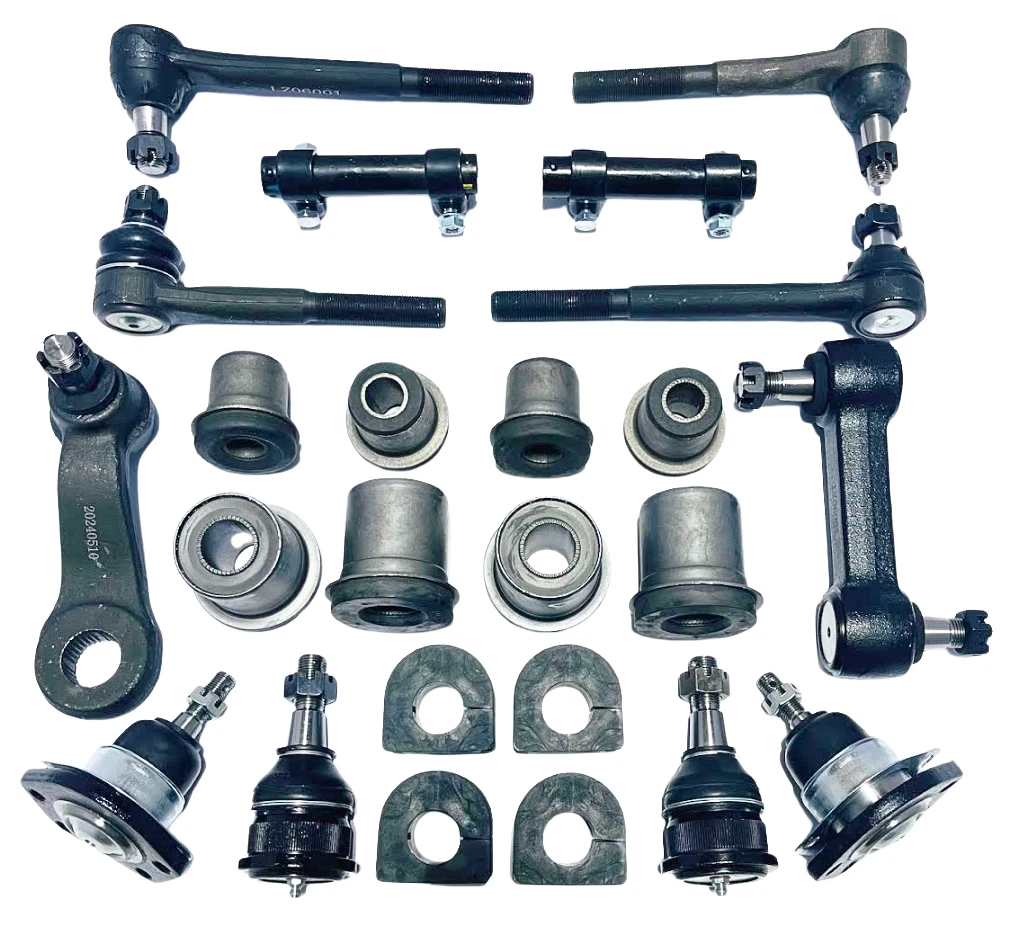
- What is this product?
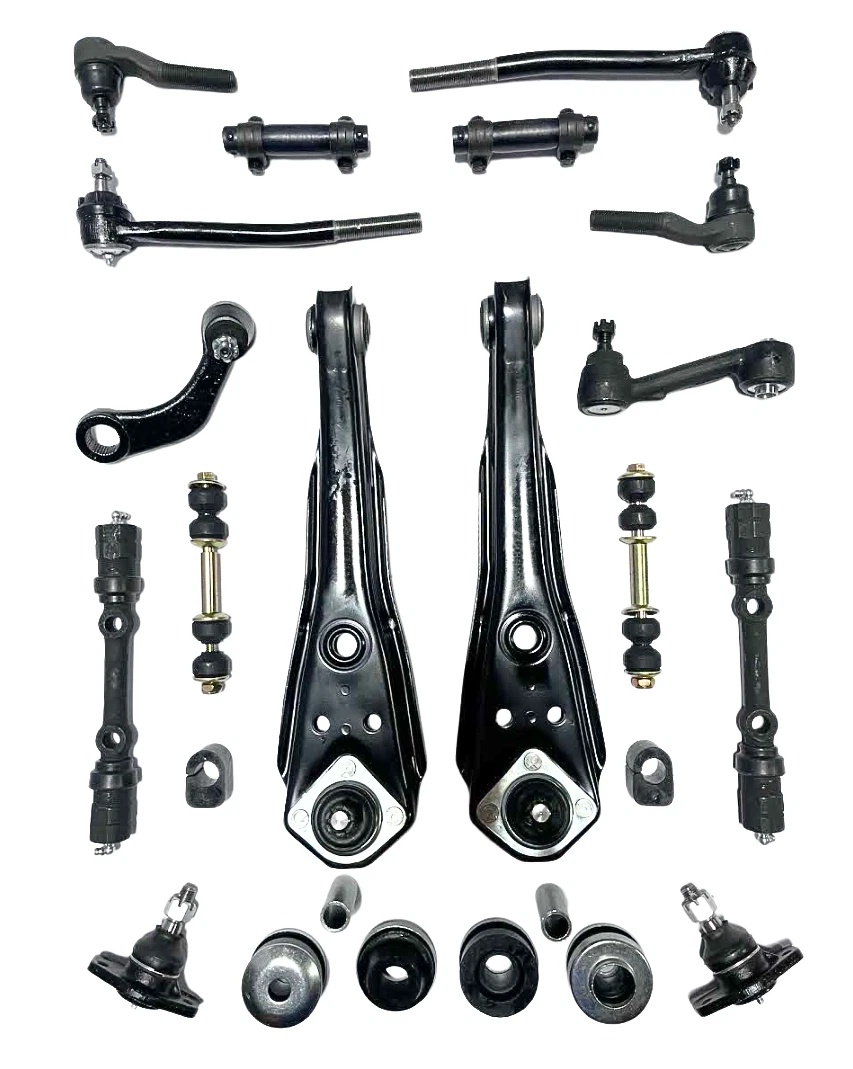
- It is a front suspension master rebuild kit for compatible 1968–1969 Ford Mustang models equipped with manual steering.
- What years does it fit?
- It is intended for 1968 and 1969 Ford Mustang applications.
- Can it be used on a power-steering Mustang?
- Not unless the individual steering components are specifically compatible with that setup.
- Why does manual steering matter for fitment?
- Manual and power steering cars can use different linkage, idler arm, center-link, pitman arm, and related components.
- Is this a complete front suspension rebuild kit?
- It is intended as a master rebuild package, but exact contents should be verified before ordering.
- Does the kit rebuild both sides of the front suspension?
- Typical master kits are designed to service the complete front end, but confirm the quantity of each component.
- Is it suitable for a restomod?
- Yes, provided the car retains compatible factory-style suspension and steering geometry.
- Can it improve steering feel?
- Yes, if worn linkage and suspension components are contributing to loose or vague steering
- Can it reduce wandering?
- It can if wandering is caused by worn suspension or steering parts.
- Can it reduce clunking noises?
- Yes, if worn bushings, ball joints, or linkage components are the cause.
- Can it reduce uneven tire wear?
- Yes, if the tire wear is being caused by worn front suspension parts and the vehicle is properly aligned afterward.
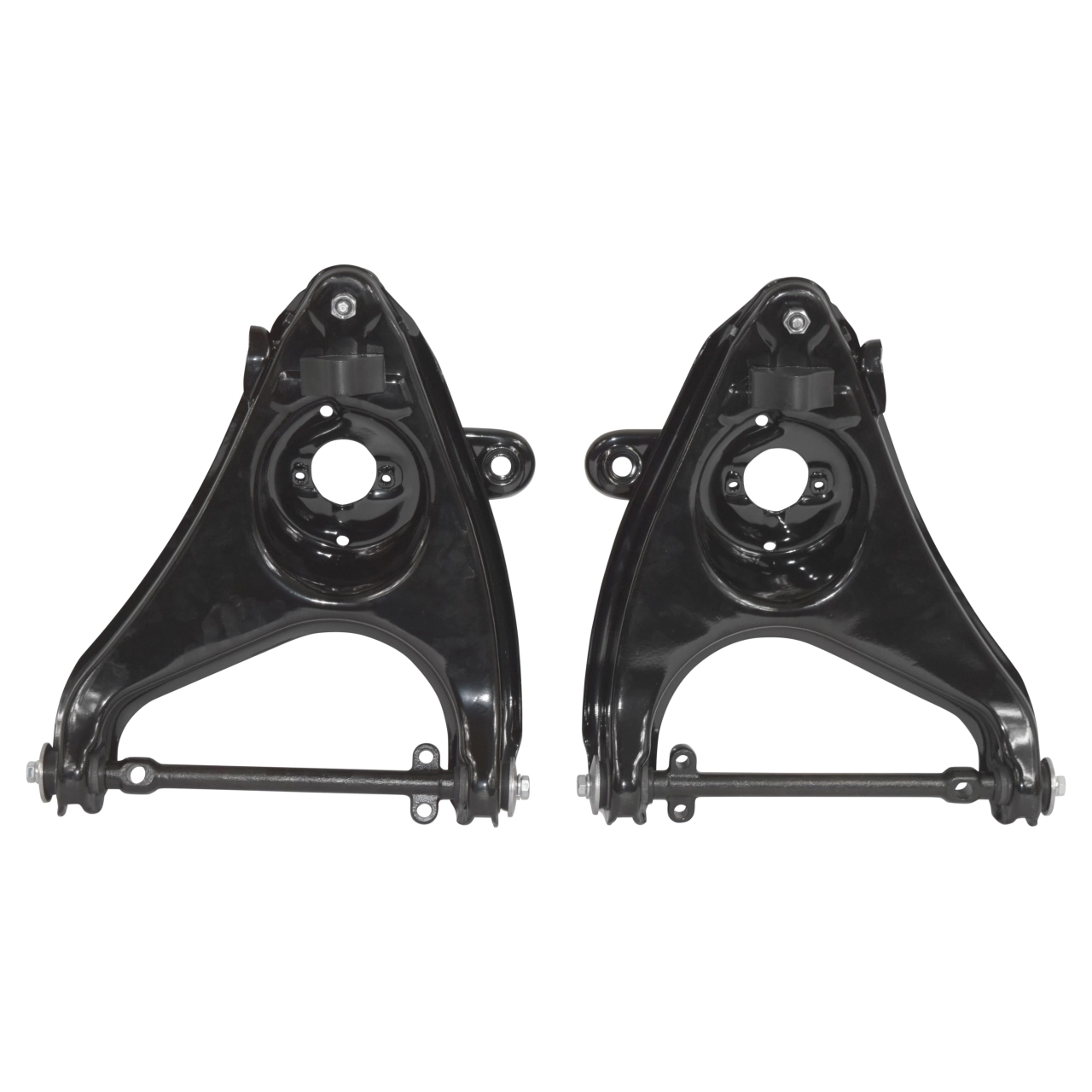
- Does the kit include upper control arm components?
- It may. Verify the exact package contents.
- Does it include the center link?
- It may or may not. Verify the exact package.
- Does it include the manual-steering linkage?
- Some kits include several linkage components, but exact contents vary.
- Should I replace all worn suspension components at once?
- Often yes, especially when several original parts are aged or worn.
- Why replace multiple parts at the same time?
- It can restore the front end more completely and reduce the chance that one worn component compromises newly installed parts.
- Can alignment be performed before all worn parts are replaced?
- It can, but the results may not hold if worn components remain.
- Can a ball joint press be required?
- Depending on the design, yes.
- Can a coil spring compressor be required?
- Yes, depending on the work being performed.
- Can heat be used on seized suspension hardware?
- Only with appropriate safety precautions and knowledge of nearby fuel, brake, and rubber components.
- Should rubber control arm bushings be tightened at normal ride height?
- Often yes, where the design requires it.
- Why?
- Tightening some bonded rubber bushings at full suspension droop can preload and shorten their service life.
- How often should greaseable joints be serviced?
- Follow the component manufacturer's maintenance recommendations.
- Can the car wander even after installing new parts?
- Yes, if alignment, tires, steering box, or other components are still incorrect.
- Can it make manual steering feel tighter?
- Yes, by removing play from worn steering components.
- Will it make manual steering lighter?
- Not necessarily. Manual steering effort is still determined by steering ratio, tires, alignment, and vehicle setup.
- Does this kit affect ride comfort?
- Replacing worn parts can improve control and reduce unwanted movement, though new bushings may initially feel firmer.
- Should the nut be loosened to align the cotter pin?
- Follow the manufacturer's procedure; typically a castellated nut is tightened further to the next slot rather than loosened, if permitted by the specified torque range.
- What should I verify before ordering?
- Confirm the 1968–1969 Ford Mustang model year, manual steering configuration, six-cylinder or V8 front-end setup, upper and lower control arm design, ball-joint style, inner and outer tie rod dimensions, idler arm and center-link arrangement, pitman arm relationship, sway bar diameter, spindle configuration, suspension modifications, and exact kit contents before purchase.